
How to Take Supplements the Right Way
Taking supplements correctly depends on timing, food pairings, and how vitamins and minerals interact. Here is when to take iron, magnesium, zinc, omega-3, vitamin D, and more.
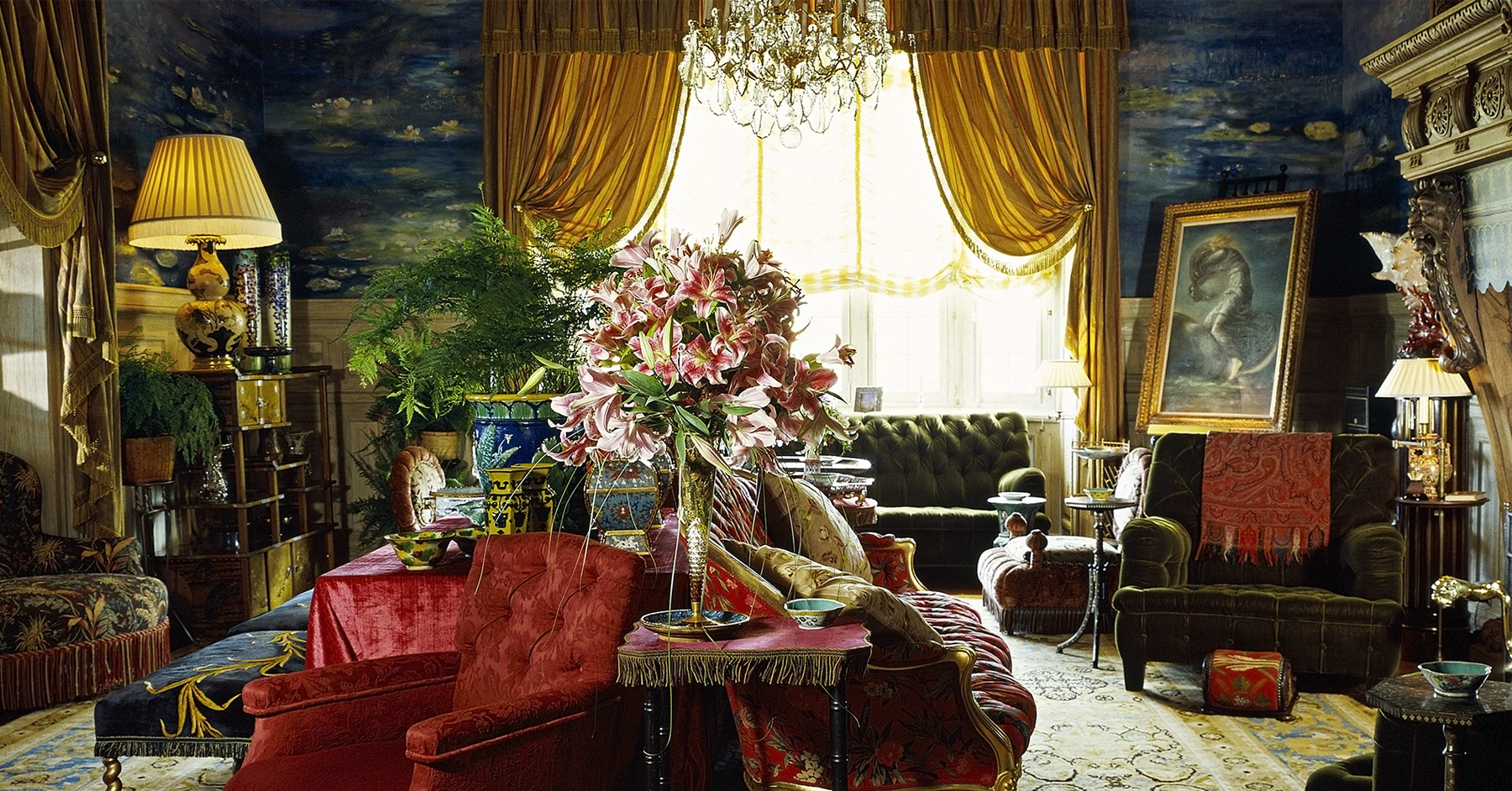
Few designers in the twentieth century understood interiors the way Yves Saint Laurent did. His houses were environments built with the same precision as couture, layered with references to art, literature, travel, and memory. Together with Pierre Bergé, Saint Laurent created three residences in Paris, Normandy, and Marrakech that today are studied by architects and designers as one of the most refined examples of personal taste ever assembled. Critics often describe them as a complete aesthetic system, each place revealing a different part of Saint Laurent’s imagination.
In the 1970s, when French interiors moved toward modernist purity, white walls, chrome, and synthetic color, Saint Laurent chose the opposite direction. He collected history. He collected atmosphere. He collected emotion. His houses became dense, sensual spaces where centuries could coexist in the same room.
The apartment on Rue de Babylone in Paris was the intellectual center of this world. Acquired in 1970, the residence already carried the legacy of French Art Deco, with wood paneling designed in the 1920s by Jean-Michel Frank. Instead of updating the interior to match contemporary taste, Saint Laurent filled the rooms with rare furniture, modern art, and decorative objects chosen with obsessive care.
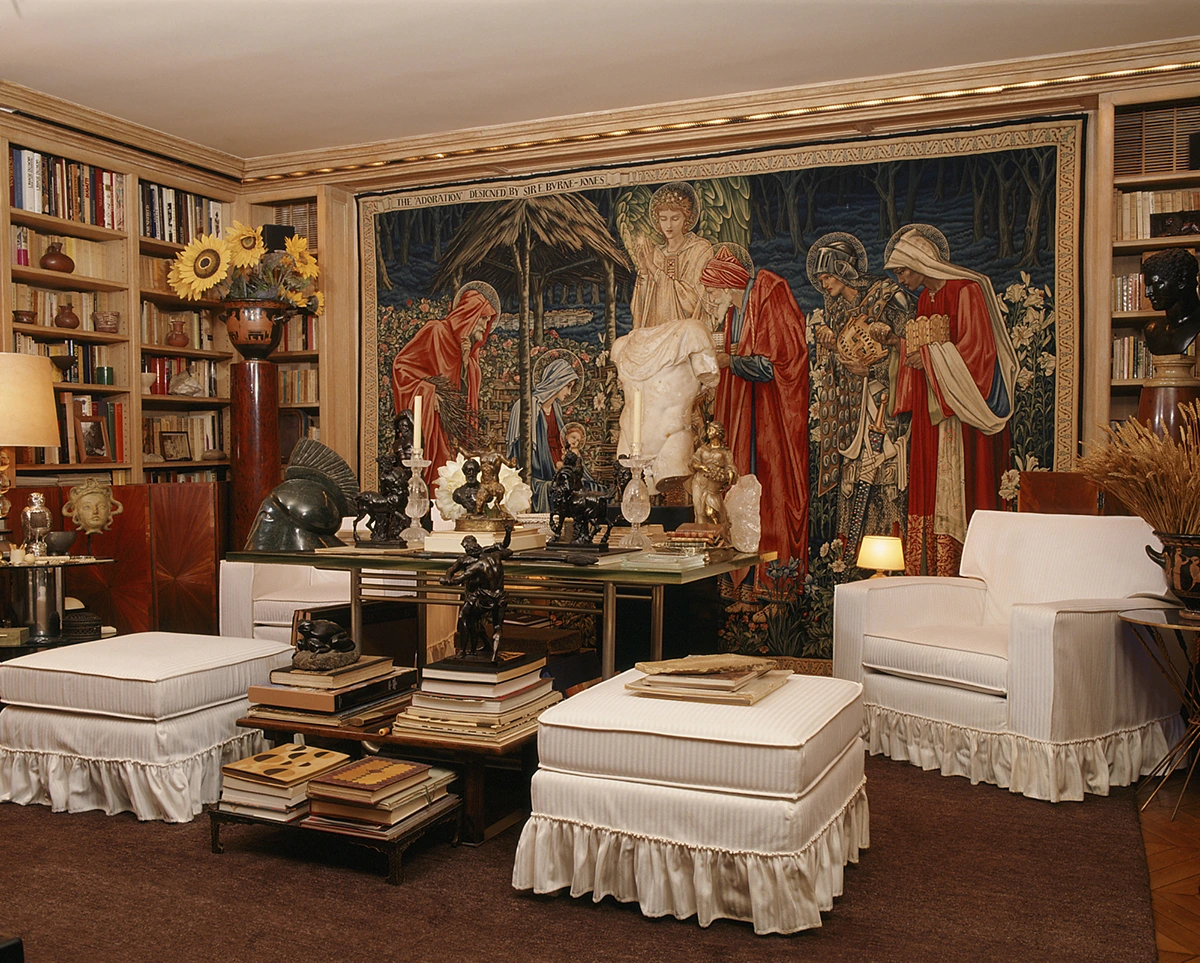
Sculptures by Brancusi stood near paintings by Goya, lacquer pieces by Jean Dunand appeared beside works by Picasso and Mondrian, and every object was placed with theatrical precision. The apartment became known for its atmosphere as much as for its collection.
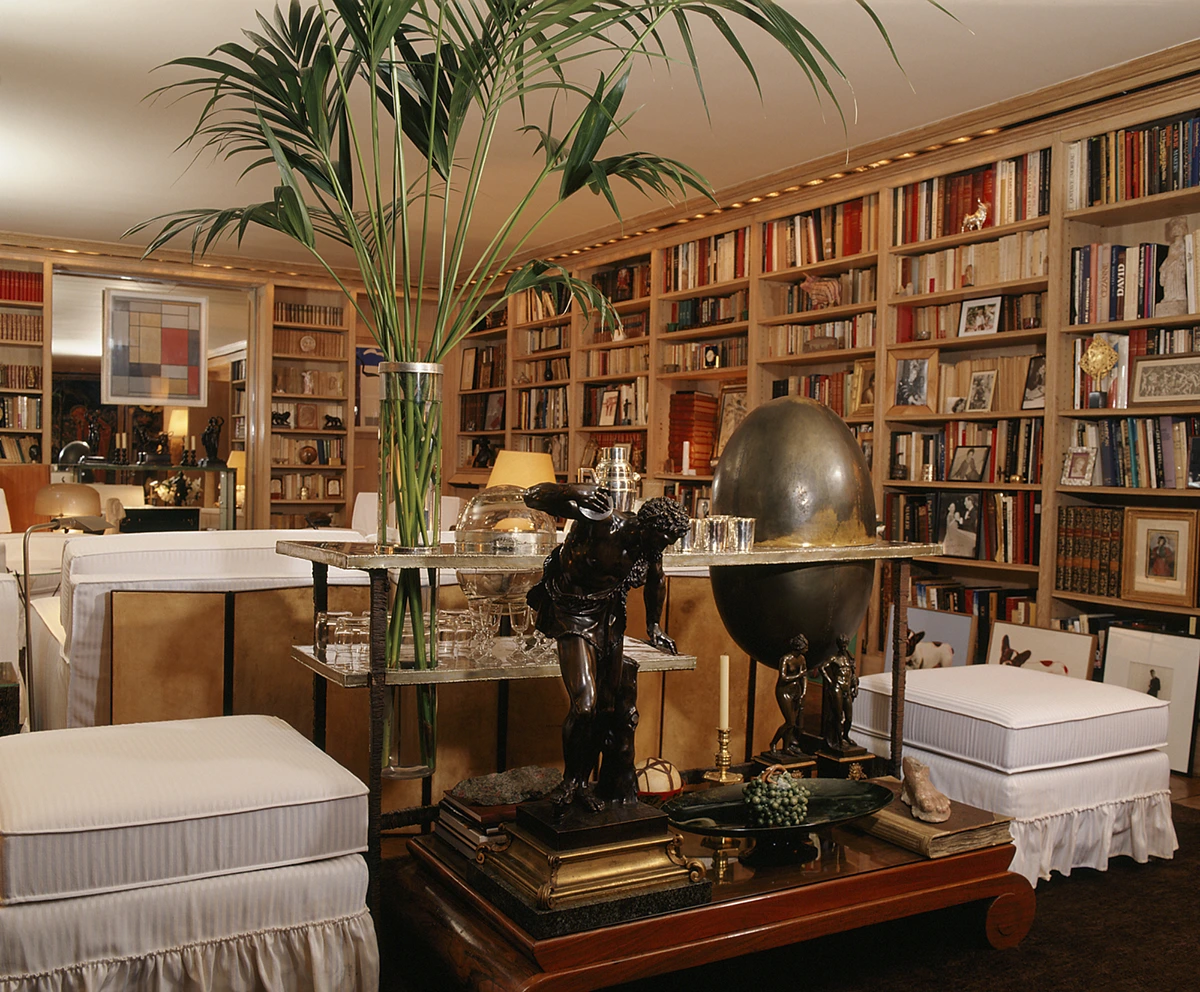 Guests remembered the scent of flowers, the carefully adjusted lighting, the heavy fabrics, the sense that the space was designed not to impress but to envelop. It was here that Saint Laurent and Bergé entertained artists, actors, collectors, and friends, turning the apartment into one of the most famous salons of late-twentieth-century Paris.
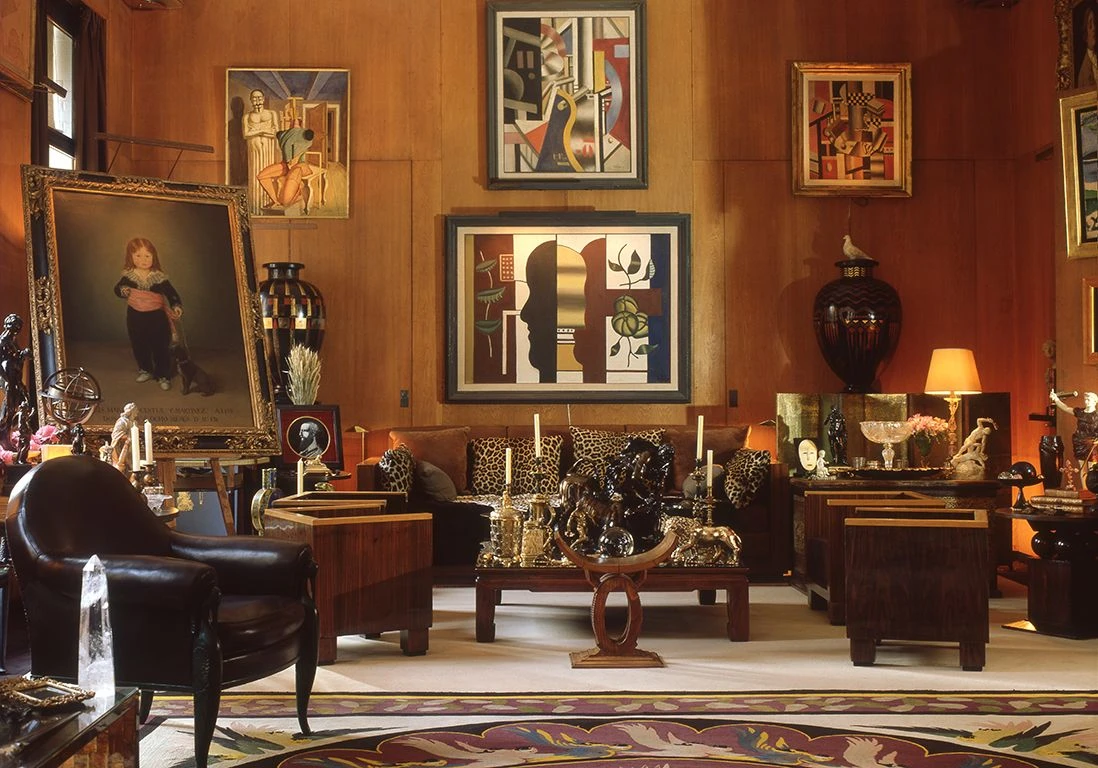
Some people change apartments every three years. I move around objects; it gives them a new life, - Yves Saint Laurent.
Château Gabriel
If Paris represented intellect and society, Normandy represented memory. Château Gabriel, purchased in the early 1980s near Deauville, was conceived as a retreat from the present. Saint Laurent filled the house with references to the nineteenth century and to the world of Marcel Proust, whose novels he read obsessively.
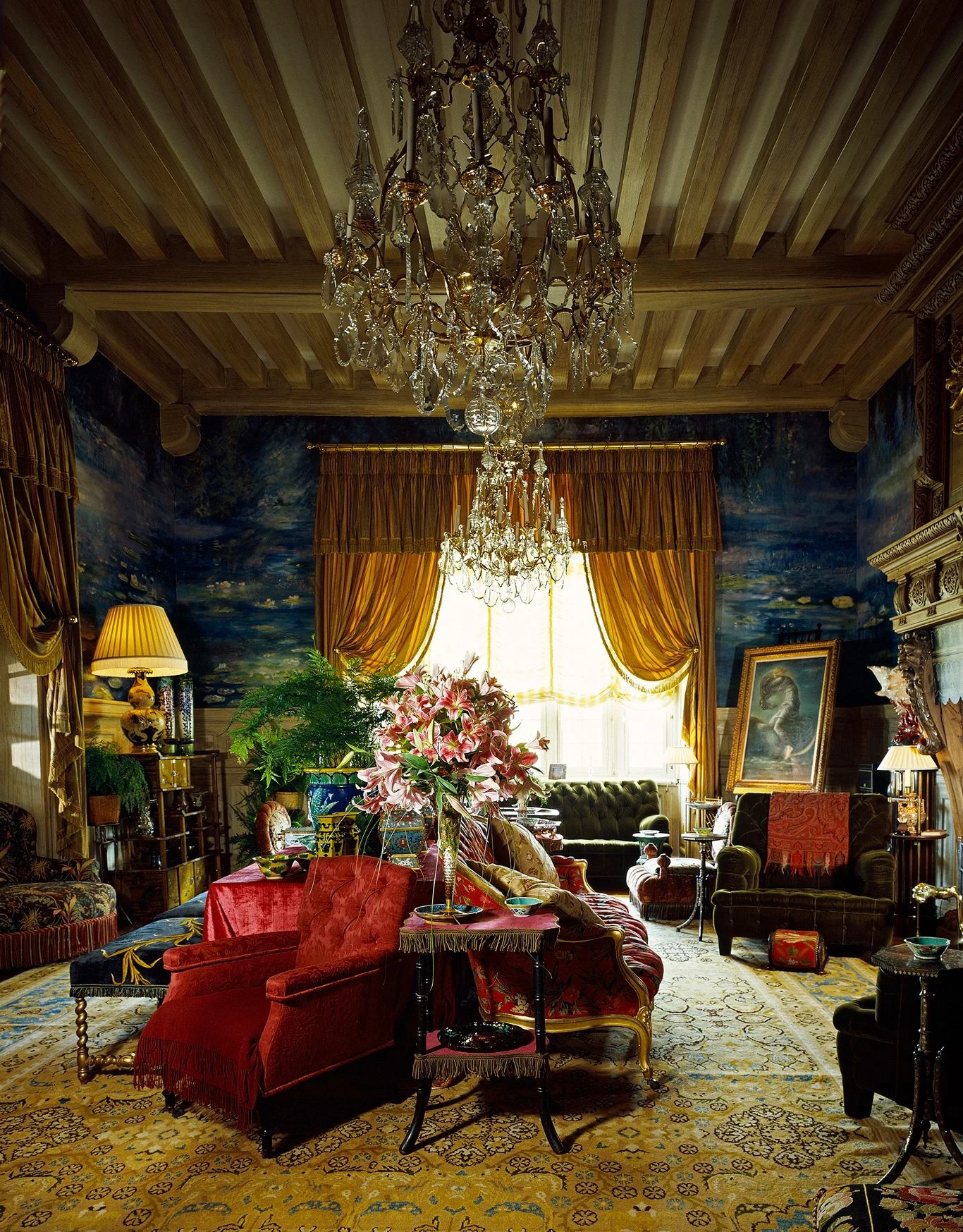
Bedrooms were named after characters from In Search of Lost Time, and the interiors were decorated with antiques, porcelain, tapestries, and books that created the feeling of stepping into another era.
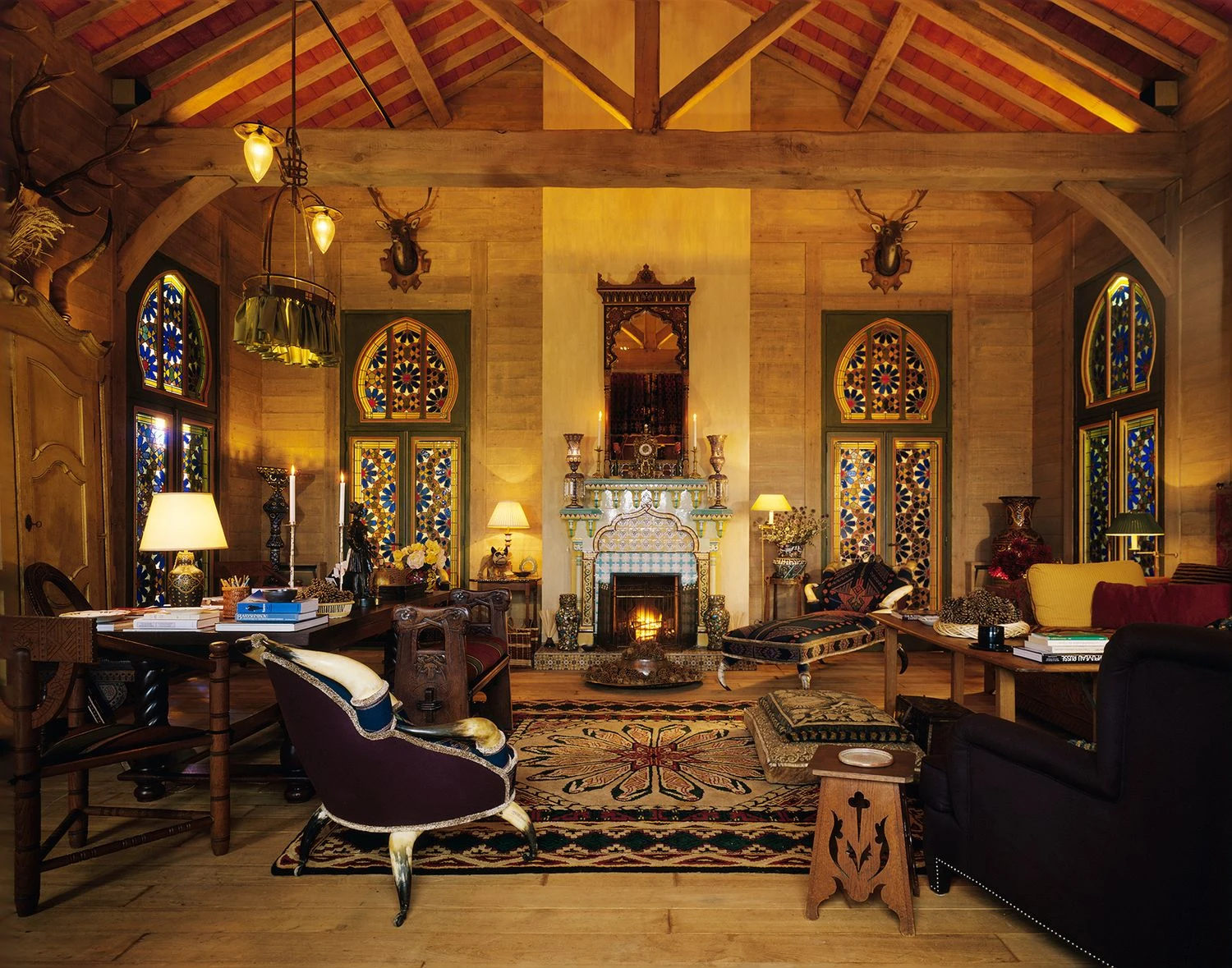
As his eyesight began to weaken, the gardens were designed to appeal to smell and touch as much as to sight, with strongly scented flowers planted near windows and paths. Friends often said the house allowed Saint Laurent to live inside his imagination, protected from the pressure of fashion and public life.
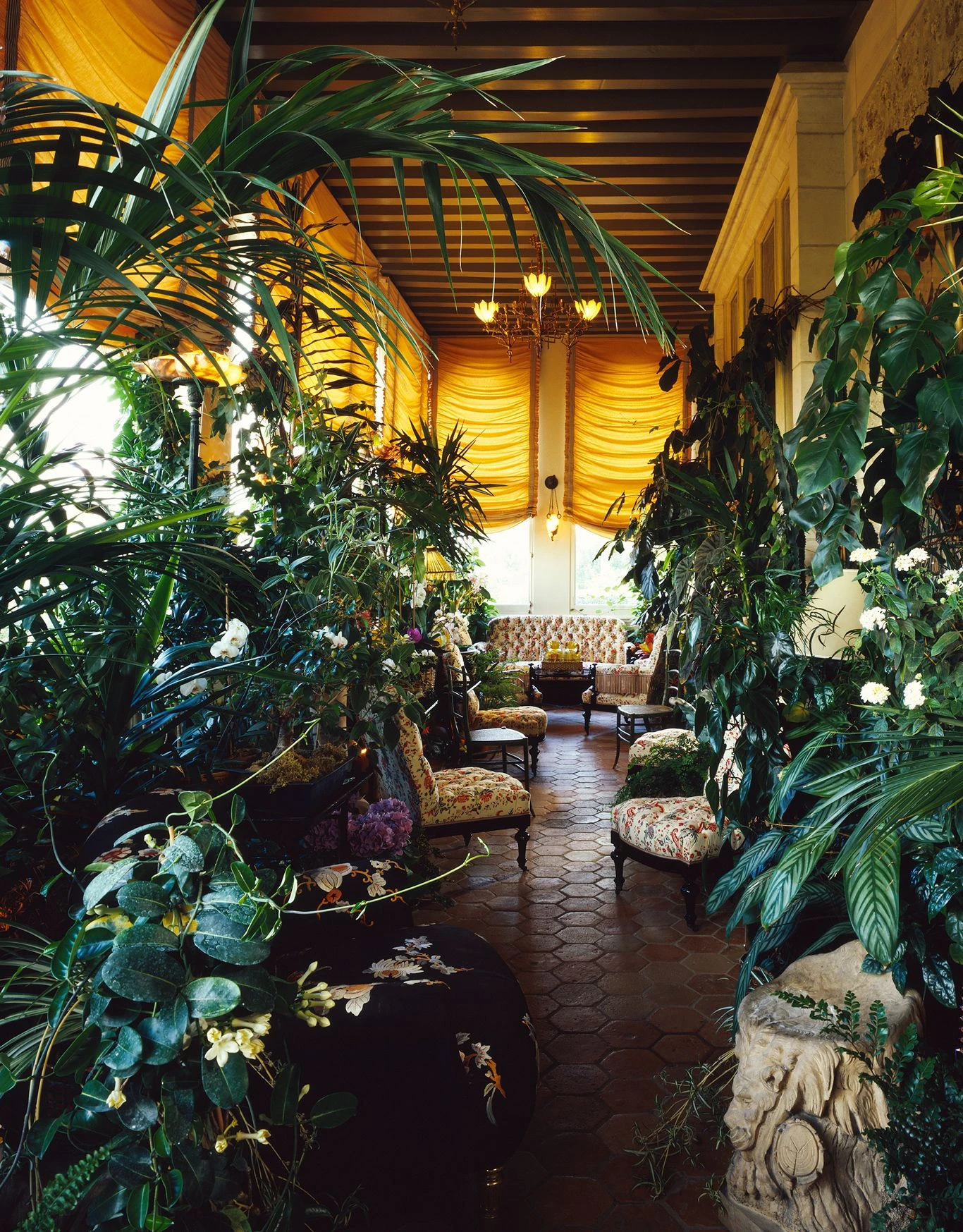
La Villa Oasis in Marrakech
Marrakech revealed the third side of his personality, the most emotional one. Saint Laurent first visited the city in 1966 and later said it changed his understanding of color forever.
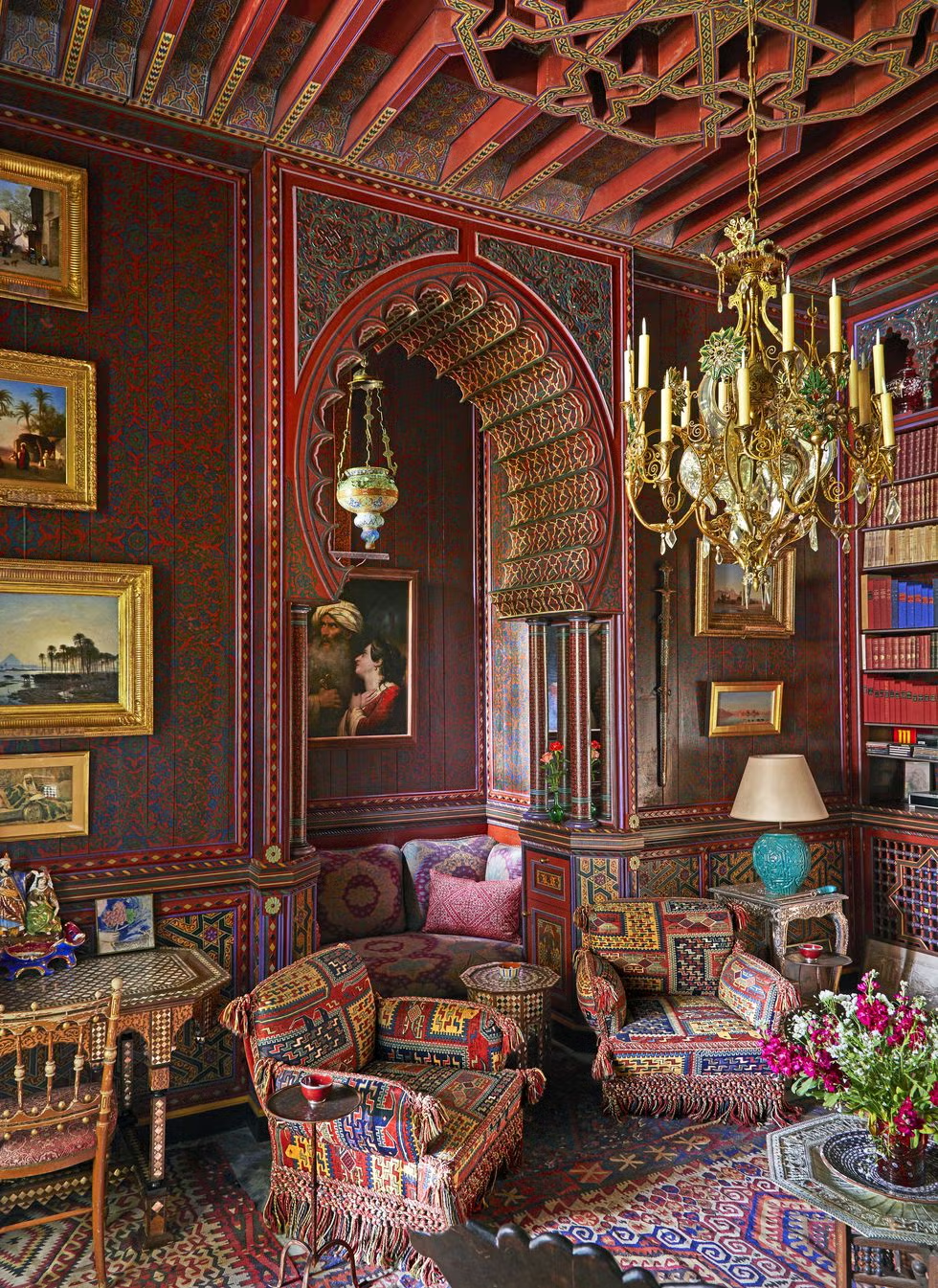
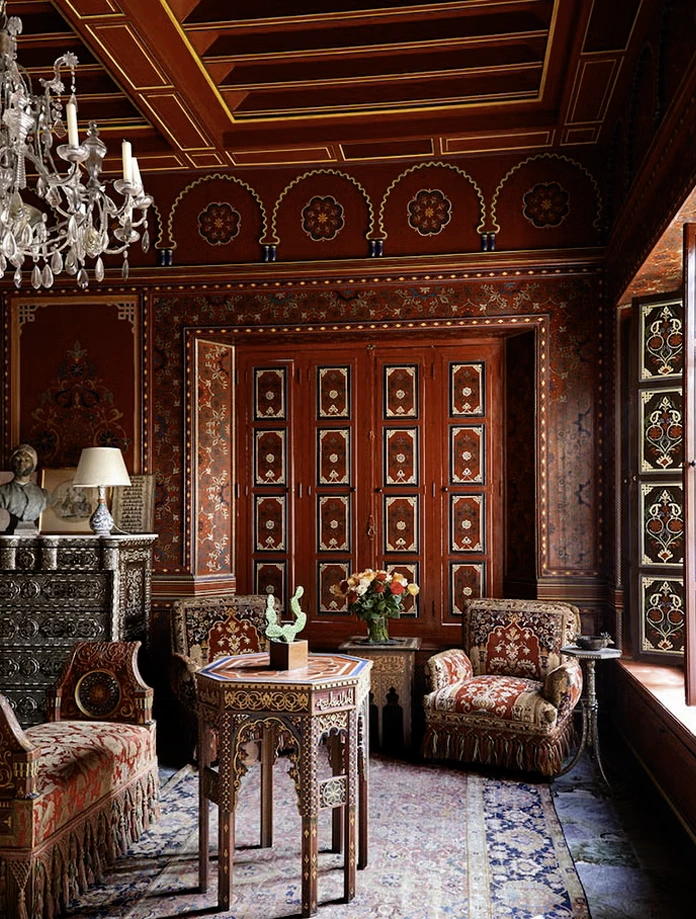
In 1980 he and Bergé bought Villa Oasis, located inside the Jardin Majorelle, the garden created by painter Jacques Majorelle and later restored by the couple when it was threatened with demolition.
 |
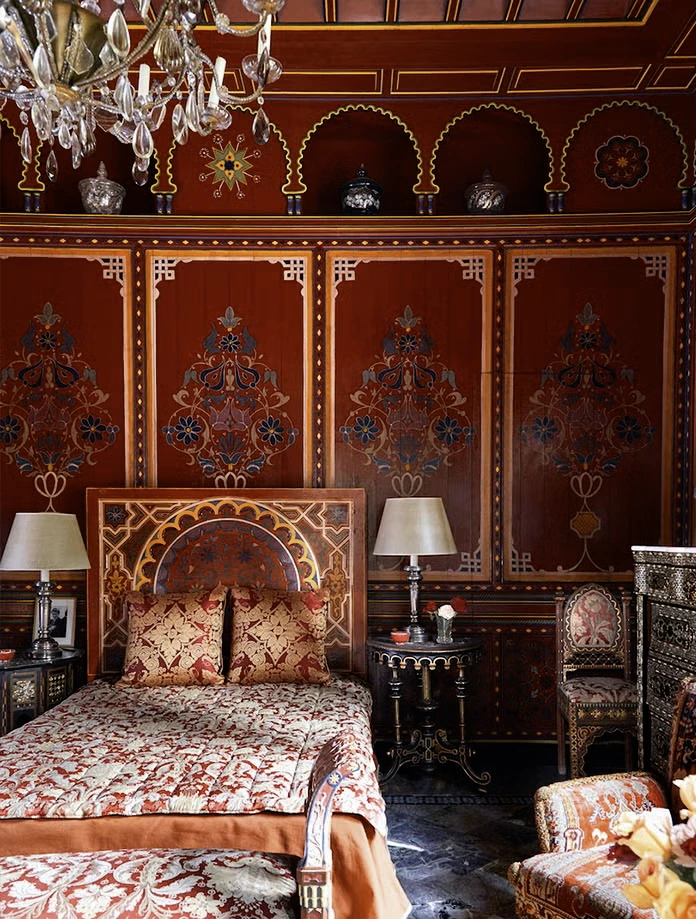 |
The villa became a place of freedom, filled with saturated blues, reds, and yellows, Moroccan tiles, carved wood, Berber textiles, and European antiques mixed without hierarchy. The interiors were designed to feel alive rather than formal, and the rhythm of life there was deliberately slow. Work was done in the mornings, long lunches lasted for hours, music played late into the night. Saint Laurent often sketched upstairs in a small room overlooking the garden, surrounded by objects that reminded him of Algeria, Morocco, and the Mediterranean light that shaped his sense of beauty. Visitors noticed that the tension visible in Paris disappeared here. In Marrakech, he seemed calm, almost weightless.
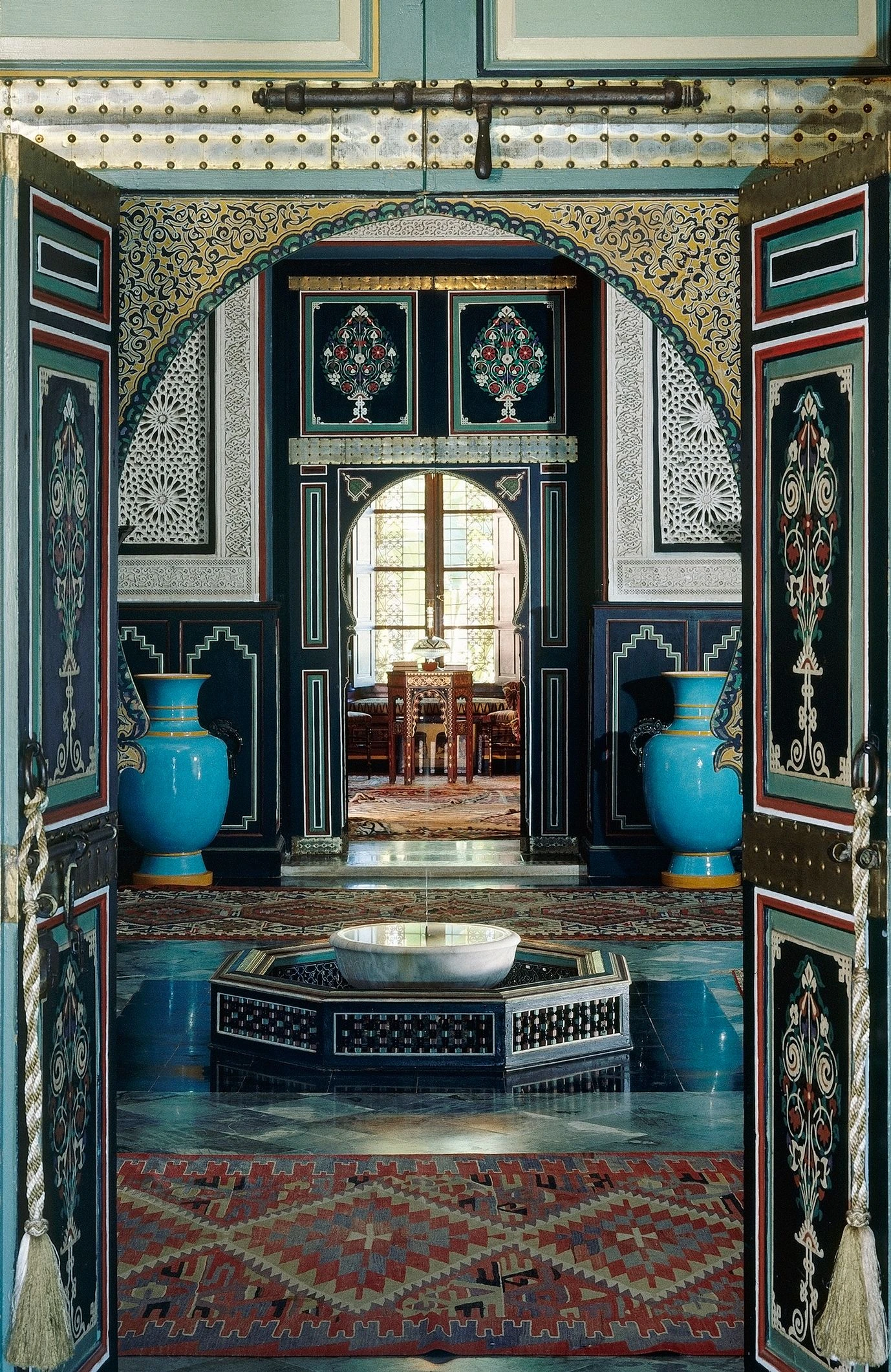
Design historians often say that these three houses explain Saint Laurent better than any biography. Paris showed his discipline, Normandy his nostalgia, Marrakech his need for color and escape. Together they formed a complete universe, one built not according to trends but according to instinct. That is why, decades later, decorators, collectors, and fashion designers still return to these interiors as a reference. Not because they represent luxury, but because they show how a house can become a portrait of the person who lives inside it.
Taking supplements correctly depends on timing, food pairings, and how vitamins and minerals interact. Here is when to take iron, magnesium, zinc, omega-3, vitamin D, and more.
Ferrari has unveiled the Ferrari Luce, its first fully electric car. Designed with LoveFrom, the model marks a new chapter for Maranello and the future of electric luxury.
A camera, perfume, oversized sunglasses, a hat and thermal spray are the summer essentials to keep in your bag during the hot season.

