Art has long served as society’s most precise mirror. The canvases housed in the world’s museums were not conceived as abstractions; they were painted as records of lived reality, shaped by artists intent on documenting the forces that defined their time.
The works examined here underscore a recurring historical pattern: tyranny emerges, resistance follows. Revolution, too, belongs to that cycle, as does the eventual triumph of those who fight for freedom. Through their brushstrokes, artists have left behind an unflinching portrait of oppressive power, and a reminder that its end, however delayed, is inevitable.
FRANCISCO GOYA. SATURN DEVOURING HIS SON
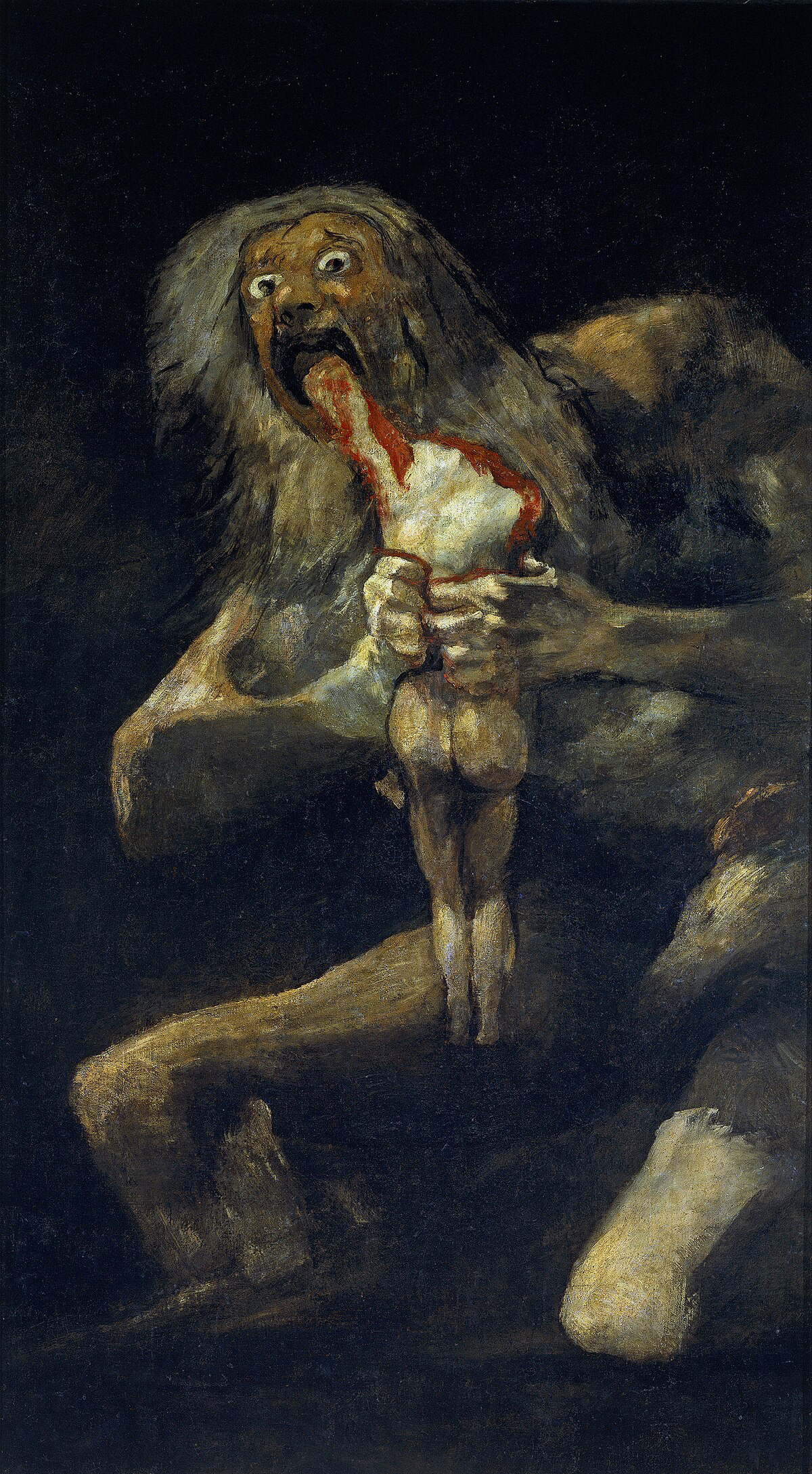
In Saturn Devouring His Son, Francisco Goya confronts power at its most unrestrained. Painted during the final years of his life, the work transforms a classical myth into a stark political allegory. Saturn, driven by the prophecy that one of his sons will depose him, turns to annihilation as a means of self-preservation.
The Roman tale is brutal by design, but in Goya’s hands it becomes something more pointed: a study of tyranny sustained by fear. Saturn’s frenzy is not only mythological — it mirrors the logic of despotic rule, where authority, once threatened, consumes the very future it claims to govern.
The violence on the canvas functions as indictment. It suggests that regimes built on paranoia inevitably turn against their own people, sacrificing generations to prolong control. Goya offers no ornament, no heroic framing — only the raw image of power devouring what should have sustained it.
THÉODORE GÉRICAULT. THE RAFT OF THE MEDUSA
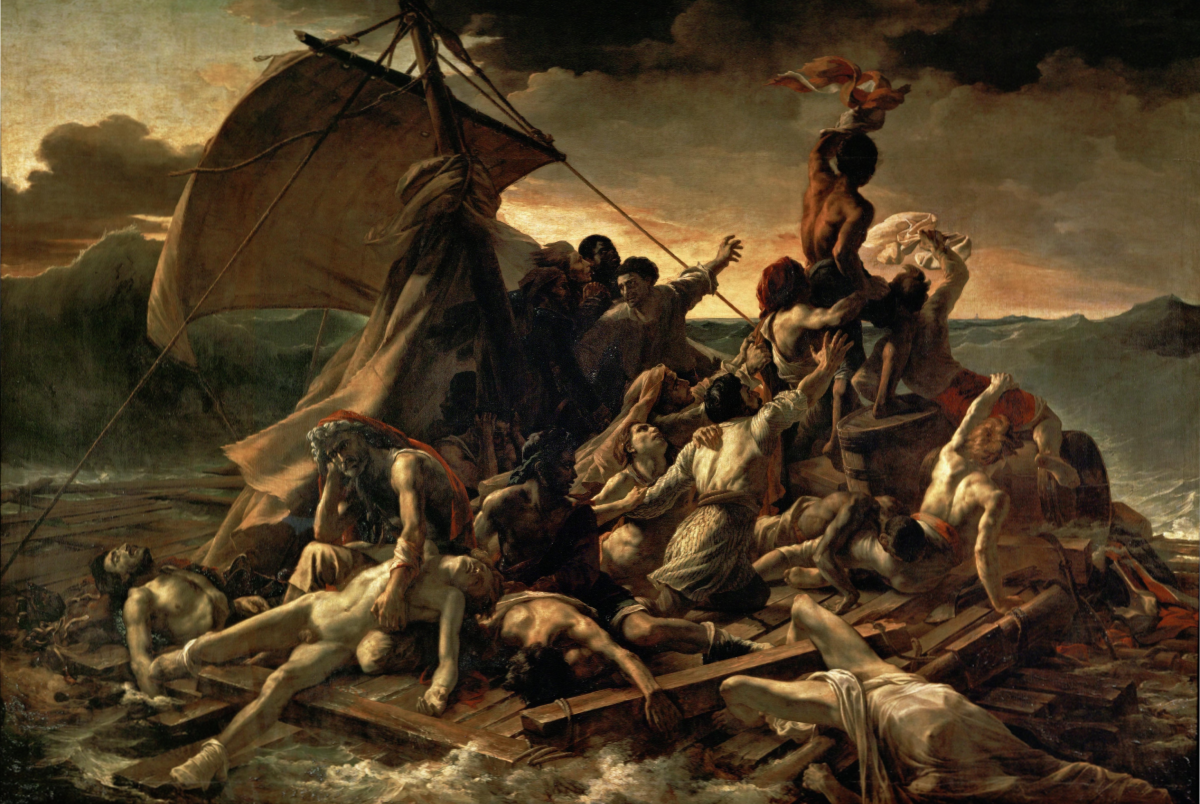
In The Raft of the Medusa, Theodore Gericault transforms a contemporary disaster into a searing political statement. The painting draws on the 1816 wreck of the French naval frigate Méduse, whose captain — widely criticized for his inexperience and political appointment — ran the vessel aground off the coast of West Africa. Approximately 150 survivors were set adrift on a hastily constructed raft, where they endured nearly two weeks of starvation and dehydration; only 15 were ultimately rescued.
Géricault’s vast canvas refuses to treat the episode as mere maritime tragedy. Instead, it frames the event as an indictment of state failure and moral negligence. The raft becomes a floating emblem of abandonment — of citizens left to suffer the consequences of corruption and incompetence.
At its core, the painting exposes a familiar hierarchy: those in command secure their own survival, while the powerless are consigned to catastrophe. Through this real and recent history, Géricault presents not only a disaster at sea, but a broader reflection on authority unmoored from responsibility.
LEVAN SONGULASHVILI. RED HORIZONS
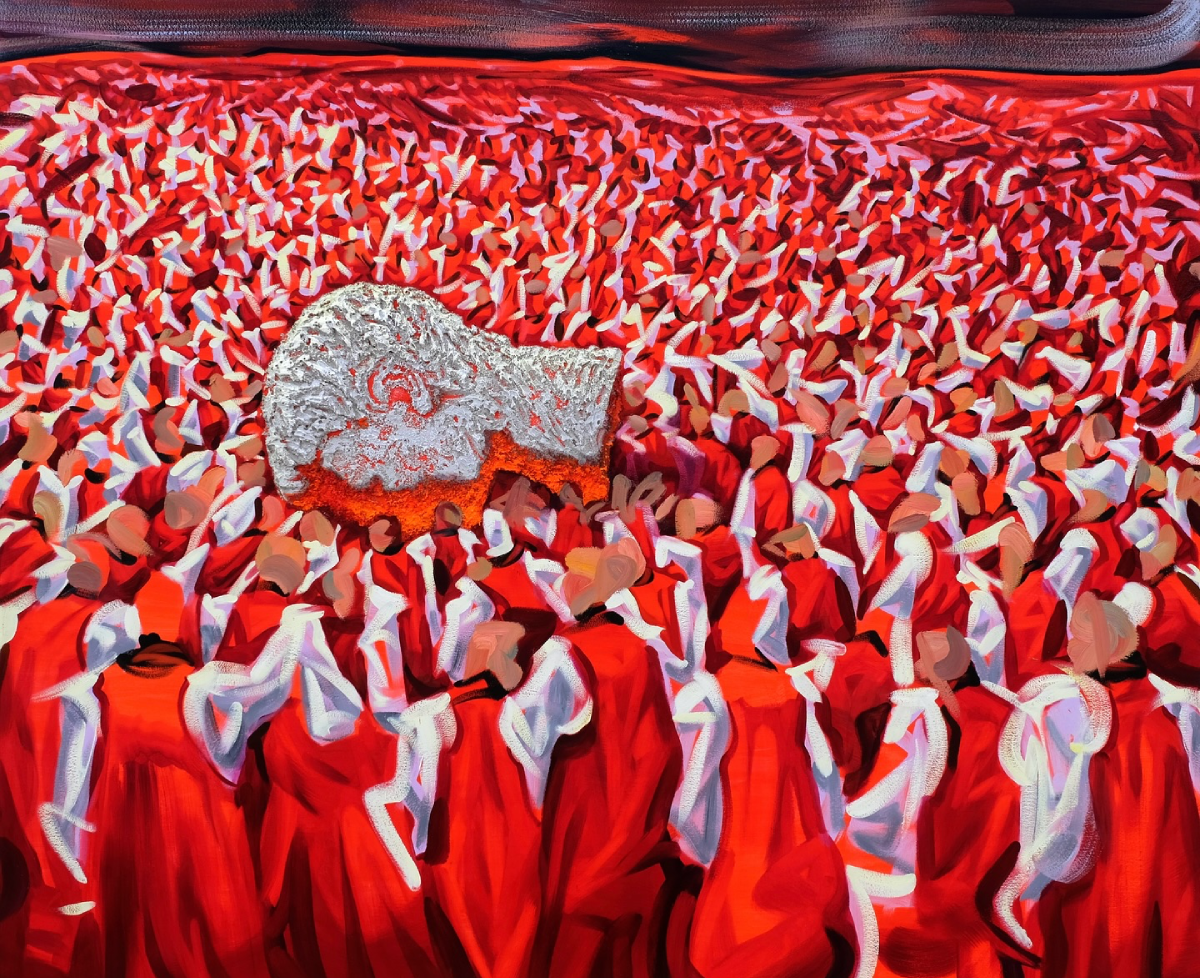
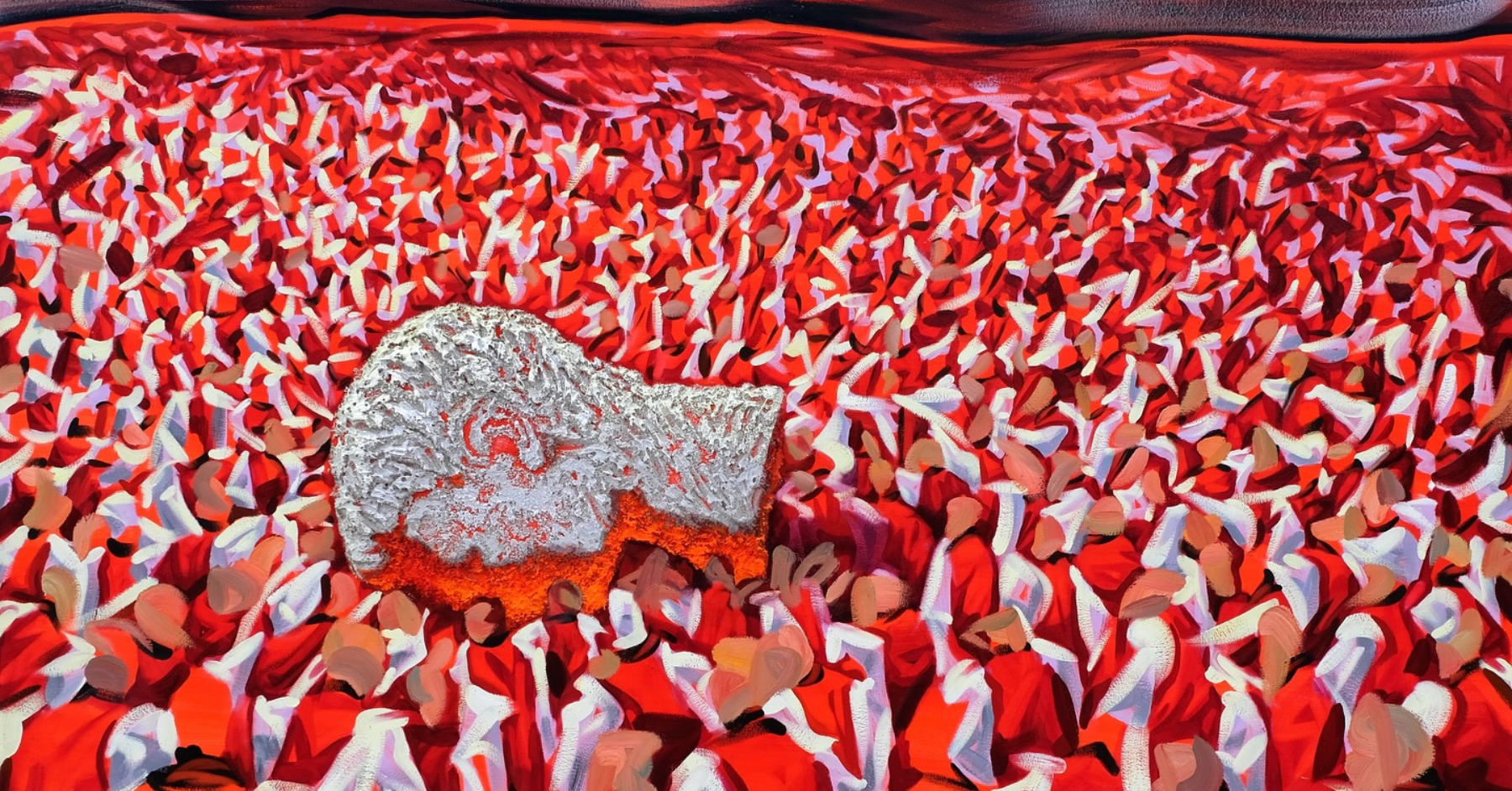
In Red Horizons, Levan Songulashvili turns his attention to Georgia’s current political climate from abroad. Created and shared from the United States, the painting channels the emotional gravity of events unfolding at home.
The composition is dominated by figures cloaked in saturated red, their procession recalling the visual language associated with Margaret Atwood’s dystopian world. At the center of the scene, they carry the severed head of a dictator — an image that is neither subtle nor decorative, but deliberately confrontational.
Songulashvili positions the work at a threshold moment. The canvas reflects a society strained by injustice, systemic repression and pervasive violence, yet poised for transformation. The red horizon is both warning and possibility — a marker of rupture, and of what may follow.
AMBROGIO LORENZETTI. THE ALLEGORY OF GOOD AND BAD GOVERNMENT
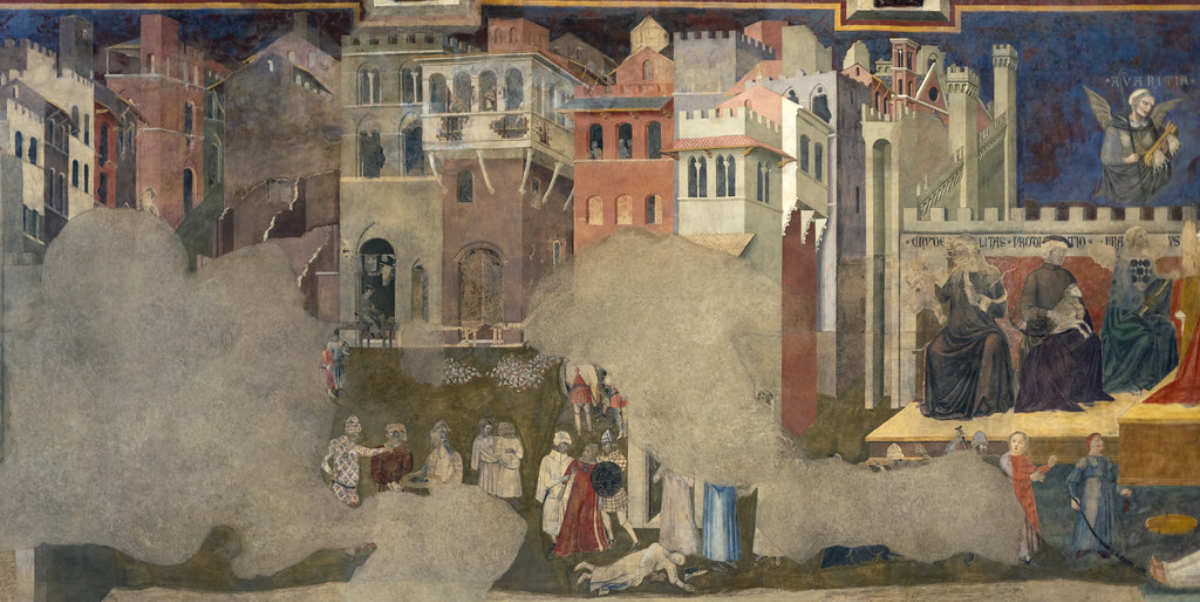
In the fresco cycle known as The Allegory of Good and Bad Government, Ambrogio Lorenzetti offers one of the earliest and most sophisticated visual meditations on political power. Painted in Siena’s Palazzo Pubblico in the 14th century, the series contrasts two systems of rule: a prosperous, orderly state shaped by justice and civic virtue, and a territory deformed by tyranny.
Lorenzetti constructs the opposition with precision. Under good governance, the city thrives — trade flourishes, architecture rises, citizens move freely. Under despotic authority, the landscape fractures into violence, decay and fear. Governance, in this vision, is not abstract; it determines the physical and moral condition of society.
Within the vast composition, one detail commands particular attention: a woman cast to the ground in the realm of bad government. Abandoned and vulnerable, she embodies justice denied. In Lorenzetti’s allegory, autocracy does not merely distort institutions — it leaves the individual defenseless. Centuries later, that fallen figure remains disturbingly current.
ეჟენ დელაკრუა. თავისუფლება უძღვება ხალხს
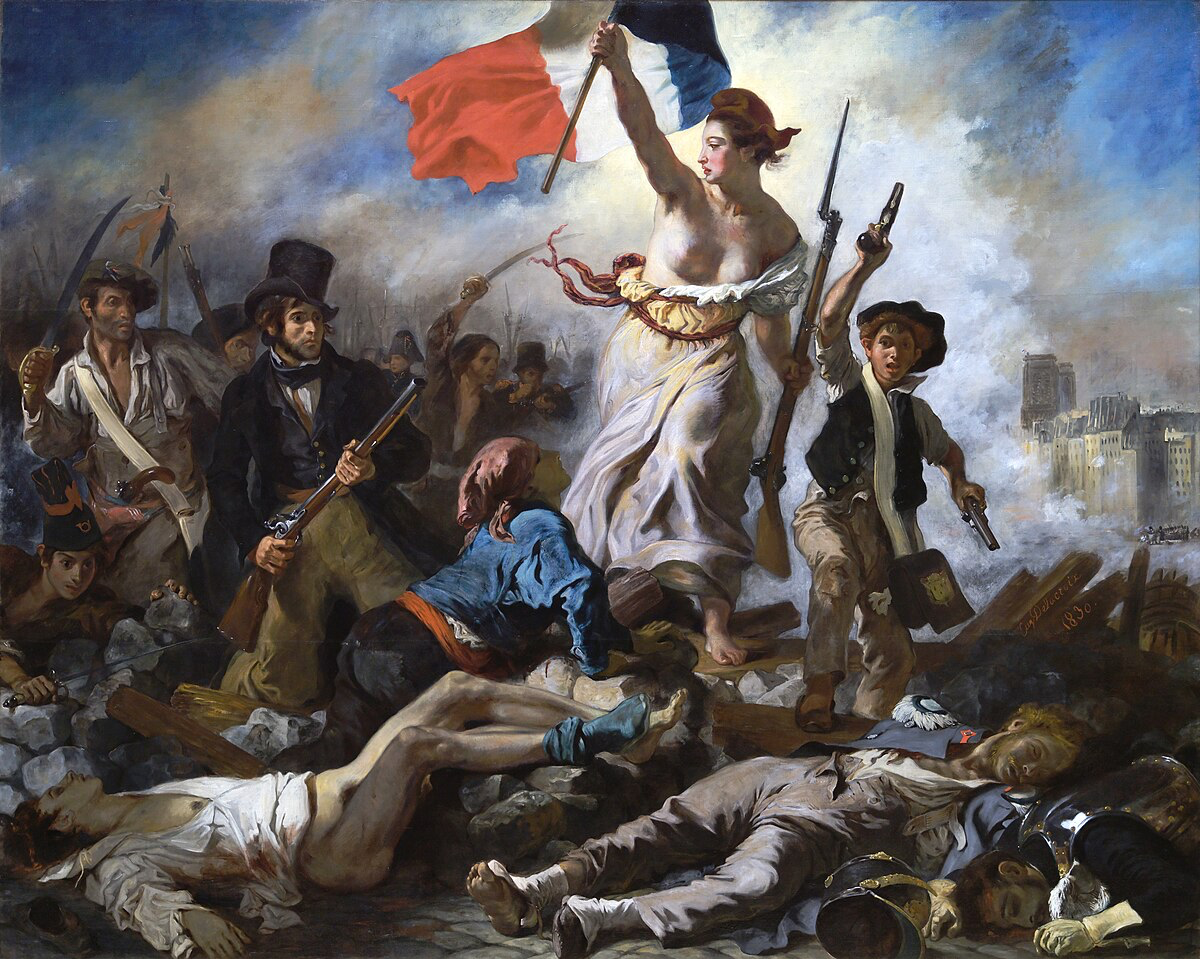
No reflection on art and resistance would be complete without Liberty Leading the People. In this 1830 canvas, Eugene Delacroix transformed a revolutionary uprising into a lasting political image.
At the center stands Liberty, rendered as a woman who advances across the barricades, tricolor raised, guiding a cross-section of society behind her. She is not distant or symbolic in the abstract; she moves forward with urgency, grounded in the smoke and debris of revolt. Around her gather workers, students, citizens — figures united not by status, but by a shared demand for change.
Delacroix’s Liberty has long transcended its historical moment. Her features can be read in every generation that steps into public space to defend its future. Today, that same resolve is visible in Georgian women standing on Rustaveli Avenue — not as allegory, but as presence — asserting that freedom is neither inherited nor granted, but claimed.